Lily at Night: A Hand-Drawn Floral Asset for Creative Design
There’s a certain magic in botanical art that feels both timeless and deeply personal. It evokes a sense of craft, of hours spent with a pencil in hand, carefully rendering the delicate curve of a petal or the intricate pattern of a leaf. This is the essence captured in the Lily at Night collection. It’s not just a set of images; it’s a toolkit of hand-drawn, colored pencil illustrations designed to bring an authentic, organic touch to a wide array of projects. For designers, crafters, and entrepreneurs, this kind of asset is invaluable—it bridges the gap between digital precision and the warmth of handmade art.
The Visual Character: More Than Just a Flower
The core of Lily at Night lies in its visual personality. The illustrations are rendered in colored pencil, a medium that inherently carries texture, softness, and a slight imperfection that feels human. The lines aren’t vector-sharp; they have a gentle grain and a layered color depth that mimics real pigment on paper. This style communicates approachability, craftsmanship, and a vintage charm that is currently resonating across design trends, from indie branding to boutique packaging.
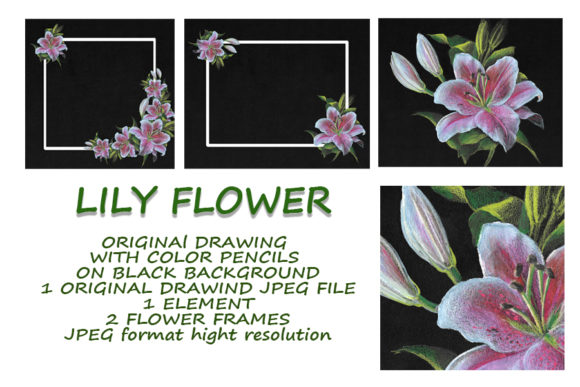
The collection is thoughtfully composed. You receive the primary asset: a full, detailed lily flower drawing. This is your hero image, perfect for making a statement on a poster or the cover of a journal. Alongside it is a close-up fragment, allowing you to focus on the beautiful, abstract details of the petals and textures without losing resolution. This fragment is incredibly useful for creating subtle background patterns, social media quote graphics, or elegant textile prints where a full flower might be too dominant.
Then, there are the floral frames. These are perhaps the most versatile elements for graphic designers. At high resolutions like 4000x3218 pixels and 3200x3200 pixels, they are built for professional print and digital use. Imagine a wedding invitation where the couple’s names are elegantly placed within the delicate, hand-drawn circle of lilies. Or a business card for a florist, a wellness coach, or a boutique stationer, where the frame adds instant brand character without the need for complex illustration work. The JPEG format at 300dpi ensures these assets are print-ready, preserving all the nuanced texture of the original pencil work.
Practical Applications: Integrating Botanicals into Your Brand and Projects
Understanding where a design asset like Lily at Night fits best is key to using it effectively. Its strength is in projects that benefit from a touch of organic elegance, softness, and artisanal quality.
For Brand Identity & Logo Design: A logo doesn’t always need to be a stark, minimalist symbol. For brands in the wellness, beauty, floral, stationery, or artisanal food spaces, incorporating a hand-drawn element can be powerful. The lily illustration can be used as a standalone logomark or integrated with typography. When pairing fonts with this style, consider clean sans-serifs for a modern contrast or elegant serifs for a classic, cohesive feel. The key is to let the illustration breathe and not compete with overly decorative typography.
For Marketing & Digital Presence: In a digital world saturated with slick, generic graphics, hand-drawn elements stand out. Use the floral frame to create standout social media posts for announcements, quotes, or testimonials. The close-up fragment makes a beautiful, textured background for Instagram stories or Pinterest pins that won’t distract from your text. For bloggers and content creators, these images can enhance article headers, create custom dividers, or design printable checklists and planners that readers will love to download and use.
For Print & Physical Products: This is where the high-resolution, print-ready nature of the assets truly shines. The applications are vast: designing elegant wedding suites (invitations, menus, place cards), creating patterns for fabric prints on pillows or tote bags, designing wrapping paper, or adding a floral touch to product packaging. Small business owners can use them to create cohesive branding materials—from thank you cards to stickers—that feel premium and thoughtful. The consistent style across all the provided elements ensures your brand looks unified whether someone is visiting your website or holding your product.
Making the Most of Your Floral Assets: A Designer's Perspective
Simply having a beautiful illustration isn’t enough; using it skillfully is what elevates a project. Here’s some practical guidance for working with a set like Lily at Night.
Evaluate the Project Fit: Before you start, ask yourself: does my project’s personality align with a soft, botanical, hand-drawn aesthetic? This style works beautifully for projects aiming for a feel that is romantic, serene, vintage, or artisanal. It might not be the best fit for a tech startup seeking a futuristic look, but it would be perfect for a yoga studio or a local nursery.
Master the Art of Font Pairing: The illustrations carry a lot of visual character. Your typography should complement, not clash. For a harmonious look, pair with a serif font that has subtle, elegant details. For a more contemporary, balanced feel, a sans serif font with clean lines and ample white space works wonders. Avoid overly complex script fonts or heavy display fonts that could make the overall design feel cluttered. The goal is visual hierarchy—the eye should know where to look first, whether at the striking lily or the important text.
Utilize the Full Toolkit: Don’t just use the main flower and ignore the other elements. The close-up fragment is a secret weapon for creating depth. Use it as a faint, repeated background texture on a website hero section or a presentation slide. The floral frames can be cropped, rotated, or used in part to create borders and corner accents. Think of the entire set as a cohesive design system for your project.
Consider the Final Output: Always check the resolution requirements of your final medium. The 300dpi JPEGs are perfect for most commercial print needs. For web use, you’ll likely need to optimize the file sizes without losing the essential texture. If you’re creating a pattern for fabric or wallpaper, you might need to tile the elements seamlessly, which requires some additional design work but can yield stunning results.
Ultimately, Lily at Night is more than just a collection of pretty pictures. It’s a versatile set of premium design assets that can infuse your work with character and professionalism. By understanding its visual language and applying it thoughtfully, you can create memorable brand identities, engaging marketing materials, and beautiful physical products that resonate with an audience that appreciates beauty and craftsmanship. It’s a practical tool for anyone looking to add a genuine, artistic touch to their creative endeavors.